
If Your Phone Works, You've Got Internet: The Simple Truth About Rural Connection
The same cell signal that powers your phone can bring real home internet to rural homes, cabins, and camps — no satellite dish, no contract, no credit check.
July 15, 2026 · Robert Lemoine · 9 min read
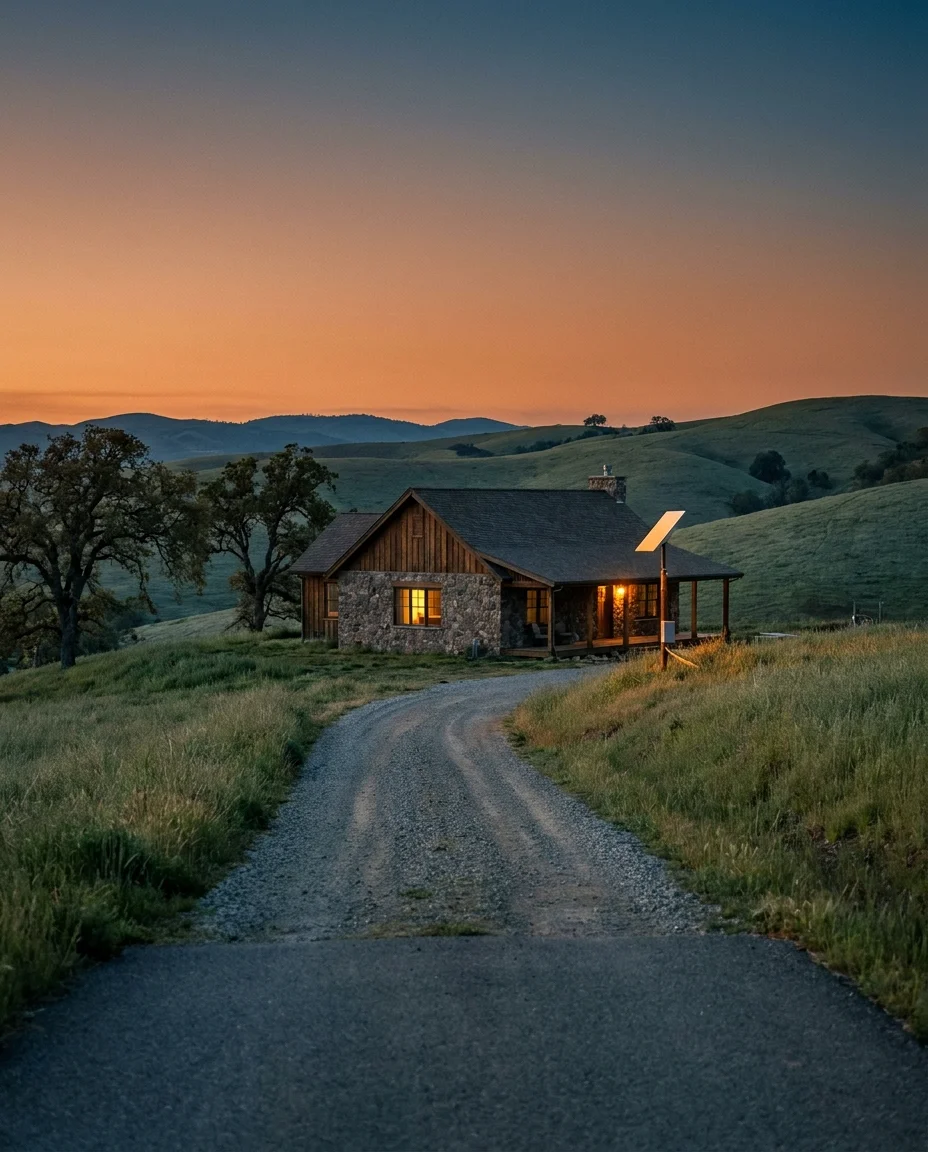
There's a spot on our road, right past the second cattle gap, where you used to have to stand on the toolbox of the truck and hold your phone up toward the pines just to send one text message. If you've ever lived where the pavement gives out, you know that spot. Every backroad has one. And for the longest time, folks out here just accepted that "internet" was a word for people who lived in town.
That's changed. Quietly, and mostly without anyone throwing a parade about it, cell coverage crept out past the city limits and down the gravel. And once that happened, a simple truth came with it: if your phone works at your place, real internet can work there too.
That's the whole idea, and it's worth sitting with for a minute, because a lot of rural families still don't realize the ground shifted under them.
The old math didn't work out here
For years, the choices for country internet were slim and sad. You could get satellite, which meant a dish bolted to the roof, a two-second lag on every click, and a bill that made your eyes water when the weather turned. You could beg the phone company to run DSL down a road they had no intention of ever touching. Or you could tether off your phone until the hotspot choked and quit.
None of that was really internet the way town folks meant it. It was a workaround. You couldn't run a video call on it without your face freezing mid-sentence. You couldn't stream a ballgame Friday night without the picture turning into a mosaic. You sure couldn't run a security camera, a smart TV, and a kid's tablet all at the same time.
So a lot of us gave up and told ourselves we didn't need it. We're country people. We can do without.
Except the world quit meeting us halfway. The bank went online. The doctor started doing visits over video. The grandkids moved off and the only way to see their faces was a screen. School started sending homework home on a laptop. "Doing without" stopped being a lifestyle choice and started being a wall.
What actually changed
Here's the part nobody explained plainly: the same cell towers that let you make a phone call and scroll your feed can carry a home internet signal, too. Not a dish pointed at the sky. Not a line-of-sight beam that a tall pine can block. Just the wireless network that's already reaching your pocket.
The gear is about the size of a small router. It ships to your door in a box. You plug it into a regular wall outlet — doesn't even have to sit by the TV — connect your antennas and power cord like the labels say, give it a few minutes to wake up, and connect your phones, TVs, computers, and cameras to it. No technician standing in your yard. No trench. No appointment window where you sit home all day.
And because it isn't satellite and it isn't line-of-sight, weather and obstructions generally leave it alone. A hard rain doesn't knock it out. A stand of trees between you and the horizon doesn't matter the way it would with a dish.
The catch — if you want to call it one — is that it only works where the network already reaches. Which brings us right back to the simple test: does your cell phone work at your location? If you can make a call and load a webpage standing in your yard, there's a real good chance you can have dependable home internet there too. That's not a sales gimmick. It's just how the technology works.
The test you can run yourself, right now
You don't need anybody to come out and tell you whether this'll work. Walk out to where your router would live — the living room, the office, the camp bunkhouse, wherever — and look at your phone.
- Do you have bars? One or two solid bars is often plenty.
- Can you load a photo-heavy website without it hanging forever?
- Can you watch a short video without it buffering to death?
If yes, you're most of the way there. The next step is just matching your address to the network that runs strongest in your particular pocket of the county, because coverage isn't the same on every road. What blankets one ridge might be thin in the holler below it. A quick coverage check at your exact address sorts that out — that's the whole reason Backroads WiFi has a coverage tool you can run before you ever spend a dime.
Who this actually helps
I think about the folks this changes things for, and it's a longer list than you'd guess.
It's the woman running a little online shop from her kitchen table forty minutes from the nearest stoplight. It's the welder who does his invoicing and orders parts at night after the shop closes. It's the retired couple who just want to video-call the grandkids in Texas without the screen turning into a slideshow. It's the deer camp that finally wants a trail-camera feed and a TV that works when the guys come in cold and wet. It's the family whose kids have been doing homework in the McDonald's parking lot in town because that was the only reliable signal for miles.
None of those people are asking for anything fancy. They just want the thing to work, from folks who understand that "remote" isn't a category on a spreadsheet — it's where they live.
It shouldn't stop where the pavement does
That's the part that always got me. Internet quietly became a utility — as basic as electricity or a phone line — and yet the map of who could actually get it stopped, hard, right about where the blacktop turned to gravel. Reliable internet shouldn't quit where the pavement quits. Your zip code shouldn't decide whether your kid can turn in an assignment or whether you can see a doctor without driving an hour each way.
The good news is it doesn't have to anymore, and it doesn't take a contract, a credit check, or an ID to find out. Plans start at $70 a month, you own your equipment instead of renting it, and if you leave for a few weeks — hunting, snowbirding, whatever — you can pause it without a penalty. You can talk to an actual human being at (318) 381-9449 who lives out on these same backroads and knows exactly what standing-on-the-toolbox feeling you're describing.
Common questions folks ask us
Can I really get internet if I don't have cable or DSL on my road? Very likely, yes. This kind of service runs over the cellular network, not cable or phone lines. If your cell phone works at your place, home internet usually will too.
Do I need a satellite dish or something bolted to the roof? No. There's no dish and nothing pointed at the sky. The equipment sits inside and plugs into a normal outlet. Because it isn't satellite or line-of-sight, weather and trees generally don't get in the way.
Will bad weather knock it out like satellite does? Generally no. Since it isn't a dish aimed at the sky, rain and storms don't interfere the way they do with satellite service.
How fast can I be up and running? The equipment ships to your door, and setup is plug-and-play — no technician visit. Most folks are online within a few minutes of plugging it in.
How do I know if it'll work at my exact address? Run a coverage check for your specific location. Coverage varies road to road, so matching your address to the strongest network is the surest way to know.
The bottom line
The gap between town and country used to feel permanent. It isn't anymore. The signal that lets you call your mama from the front porch is the same signal that can put a real, dependable internet connection in your house — no dish, no contract, no trip to town.
If your phone works, our internet works. That's not a slogan we made up to be cute. It's the plain truth of where technology finally caught up to where you already live.
"Or what man is there of you, whom if his son ask bread, will he give him a stone?" — Matthew 7:9. Good things aren't just for folks in town.
Backroads WiFi is an independent service provider. AT&T®, Verizon®, and T‑Mobile® are registered trademarks of their respective owners; Backroads WiFi is not affiliated with, endorsed by, or sponsored by them. Network names are used only to describe the underlying wireless network used to provide service.
#RuralInternet #BackroadsWiFi #CountryLiving #OffGridLiving #RuralAmerica #HomeInternet #NoContracts #WhereThePavementEnds #CellularInternet #RuralLife #FarmLife #StayConnected #SmallTownUSA