
Two Mississippis, One Connection Problem: Rural Internet From the Delta to the Hills
From Delta cotton and catfish country to the hill-country hollows, Mississippi families can get real home internet wherever their cell phone already works.
July 20, 2026 · Robert Lemoine · 9 min read
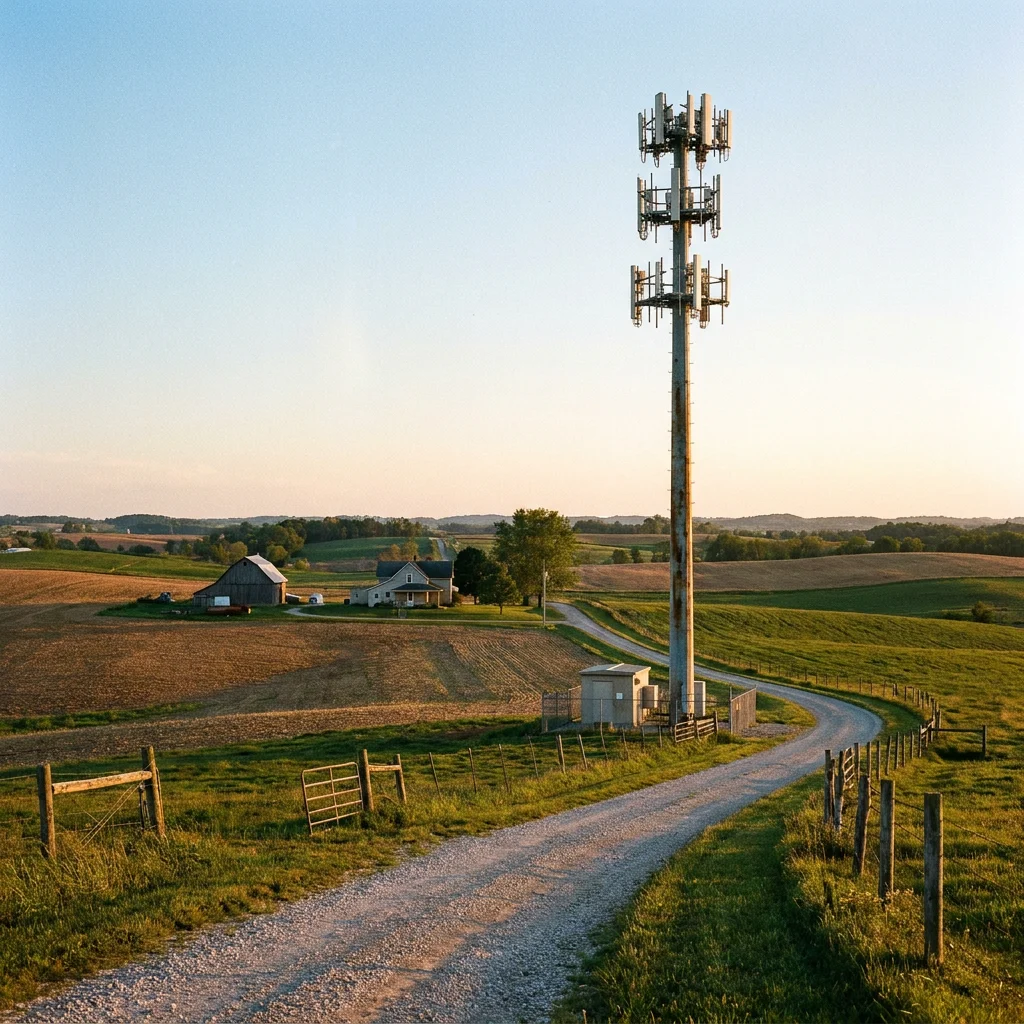
Drive across Mississippi in July and you'll see two different worlds sharing one state. Out in the Delta, the land runs flat to the horizon — cotton and soybeans and rice stretching farther than your eye can follow, and catfish ponds shining like scattered mirrors in the heat. Up in the hill country and over toward the piney woods, it's the opposite: hollows and ridges, timber and pasture, houses tucked back down long gravel drives where the trees close in overhead. Two landscapes, one shared problem — a whole lot of Mississippi families still can't get a decent internet connection at home.
If that's you, or somebody you love, this one's worth reading. Because the fix is probably closer than you think.
The most rural state in the country
Mississippi is, by a lot of measures, the most rural state in America. More of its people live outside the cities and towns than just about anywhere else. That's a beautiful thing in most respects — it's why the fishing's good, the land's affordable, the neighbors are real, and the pace of life hasn't lost its mind. But it's also exactly why the internet map looks the way it does.
Cable and fiber companies run their lines where the houses sit close together, because that's where the money is. Down a Delta turn-row or up a Tishomingo County ridge, the houses don't sit close together. They sit a quarter mile apart, or a mile, with a lot of cotton or timber in between. So the lines never got run, the state got labeled "underserved," and families made do with whatever they could scrape together — usually a satellite dish that lags and jacks up the bill, or a phone hotspot that taps out before the kids finish their homework.
For a farming state, that's a serious handicap, because modern agriculture runs on data now.
Farming got connected, whether the farmhouse did or not
Here's something folks in town don't always realize: a modern Mississippi row-crop or catfish operation is a technology business now.
The tractors and combines run GPS guidance and yield monitors. The irrigation gets scheduled off soil-moisture data and weather models. Grain and cotton get marketed on commodity apps where a few cents a bushel decides whether the year was worth it. Catfish farmers monitor pond oxygen with sensors because a bad night can wipe out a pond. The crop insurance, the FSA paperwork, the input orders, the equipment diagnostics — all of it lives online now.
The equipment got connected. Too often the farmhouse didn't. You've got a combine in the field pulling down satellite data and a farmer back at the house who can't get a video call to hold together long enough to talk to his banker. That gap is the exact thing worth closing.
The same signal that works your phone
Here's the good news, and it's the same good news no matter which Mississippi you live in — Delta flatland or hill-country holler. If your cell phone works at your place, you can very likely get real home internet there too.
It's cellular home internet. It rides on the wireless network that already reaches your pocket — the same one you use to call the co-op or check the weather radar before you cut hay. The equipment is about the size of a router, it ships to your door, and you plug it into a regular wall outlet. No dish on the roof. No line-of-sight beam that a stand of pines or a grain bin can block. No technician driving out to find your place at the end of a two-mile gravel drive. You connect the antennas and power like the labels say, give it a few minutes, and hook up your TVs, phones, computers, and cameras.
And because it isn't satellite, the Mississippi weather doesn't torment it the way it does a dish. Those afternoon thunderstorms that build up over the Delta in July, the ones that turn the sky green and dump two inches in twenty minutes — they generally don't knock this out.
The test is dead simple: does your phone work at your place? If it does, our internet very likely will too. That's the whole reason Backroads WiFi does what it does — dependable internet for rural homes, camps, and farms in Mississippi and all fifty states, running off the signal that's already there. Plans start at $70 a month, no contract, no credit check, no ID, and you can run a coverage check on your exact address before you spend a nickel.
Hollows, hunting camps, and the whole rest of the state
The Delta gets the attention, but the same story plays out everywhere in Mississippi.
Up in the hills, folks living down in the hollows have fought bad internet for years because the terrain itself gets in the way of the old technologies. The deer camps and hunting leases scattered through the timber want trail-camera feeds and a working TV for the season. The little towns full of retirees want to video-call the grandkids in Jackson or Memphis without the picture freezing. The families homeschooling, the folks working remote, the ones running a small business off the kitchen table — all of them need the same thing: a connection that keeps up out where they actually live.
None of that is fancy. It's just the modern baseline, and Mississippi families have earned the right to it as much as anybody in a subdivision.
Small business, small town, big opportunity
There's an entrepreneurial streak running through rural Mississippi that a working connection sets loose in a big way. All across the state, folks are building livelihoods out of their homes and land — the lady selling her preserves and crafts online, the fellow running a small-engine repair business who needs to order parts and take payments, the young couple turning a hobby into an online shop, the barber or the baker or the mechanic who just needs a Facebook page that actually works to reach the whole county. In a place where the nearest big employer might be an hour away, being able to make a living from home isn't a luxury. It's often the difference between staying and leaving.
The internet is the great equalizer here. A craftsman in a Mississippi small town can sell to customers anywhere in the country now, same as a shop in a big city. A service business can be found on a phone search instead of just by word of mouth. A farmer can market directly to buyers instead of taking whatever the middleman offers. But every bit of that depends on a connection that holds up out where these folks actually live and work — which, once again, is exactly where the old providers never reached.
That's the opportunity that opens up when the signal finally arrives. Not just streaming and homework and video calls, real as those are, but the chance for rural Mississippi families to build something, right where they are, without leaving the place they love. For a state with this much grit and this much talent, that's worth getting excited about.
Common questions from Mississippi
Can I get home internet in the Delta with no cable or fiber? Very likely, yes. Cellular home internet doesn't need cable or fiber — it runs on the wireless network. If your cell phone works on your land, home internet usually will too.
I live down a holler in the hills. Will terrain block it? Unlike line-of-sight or satellite systems, this rides on the cellular network, so a hill or a stand of pines is far less of a problem. The real test is whether your phone gets a usable signal there.
Will summer storms knock it out? Generally no. Because it isn't a dish aimed at the sky, thunderstorms and heavy rain don't interfere the way they do with satellite service.
Is it good enough for farm business and streaming? Yes. It's built for streaming, video calls, cameras, and working from home, which covers most everything a modern farm office and family need.
Mississippi deserves to be online
There's a stubborn, self-reliant streak in rural Mississippi that I admire deeply — people who make do, who fix it themselves, who don't wait around for somebody to hand them anything. That's exactly the spirit that built this state. But making do with a lousy internet connection isn't a virtue anymore; it's just a tax on living where you love to live. And it's one you no longer have to pay.
If your phone works out there among the cotton or up on that ridge, there's a real good chance you can finally have the connection the rest of the world takes for granted — without a dish, a contract, or a trip to town.
"For the LORD thy God bringeth thee into a good land... a land of wheat, and barley, and vines, and fig trees." — Deuteronomy 8:7-8. He was describing good country. Mississippi qualifies.
Backroads WiFi is an independent service provider. AT&T®, Verizon®, and T‑Mobile® are registered trademarks of their respective owners; Backroads WiFi is not affiliated with, endorsed by, or sponsored by them. Network names are used only to describe the underlying wireless network used to provide service.
#Mississippi #MississippiDelta #RuralInternet #RuralMississippi #BackroadsWiFi #FarmLife #CatfishCountry #HillCountry #OffGridLiving #CountryLiving #AgTech #StayConnected #DeepSouth