
From the River to the Ridges: Rural Internet Across Tennessee
Appalachian hollows and West Tennessee farms alike have been cut off from real internet. Cellular home internet reaches rural Tennessee wherever a cell phone works.
July 27, 2026 · Robert Lemoine · 9 min read
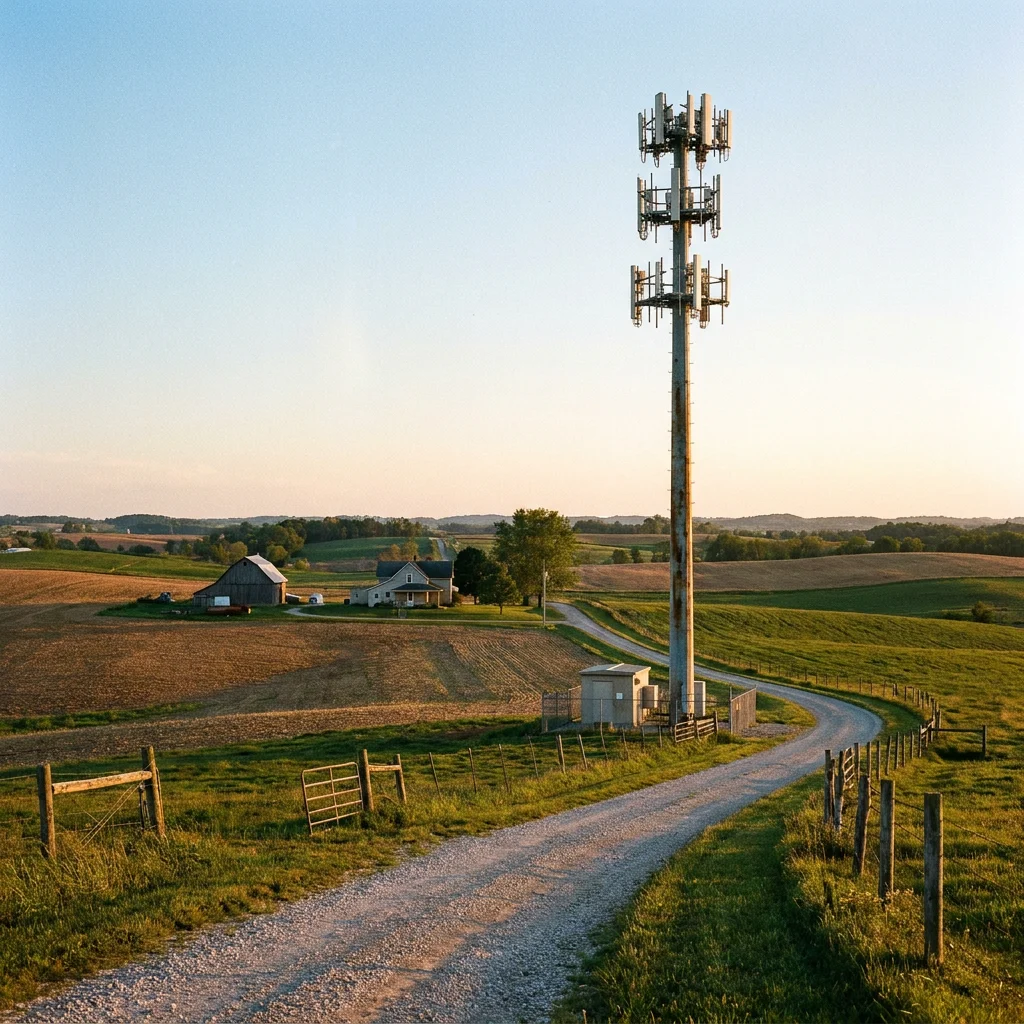
Tennessee stretches a long way — over 400 miles from the Mississippi River bottoms in the west to the Appalachian peaks in the east — and just about every mile of it that isn't a city is the kind of country that internet companies never bothered with. West Tennessee farmland. Middle Tennessee's rolling hills and horse country. And out east, the ridges and hollows of Appalachia, some of the most beautiful and most stubbornly hard-to-reach land in America. If you live back in it — down a gravel road, up a mountain cove, out past where the cable quits — you already know the story. Let's talk about how it finally changes.
Appalachia: where the mountains block everything
Start out east, in the Tennessee mountains, because that's where the internet problem is at its worst and where the fix matters most.
The Appalachian ridges and hollows are breathtaking, and they are murder on the old internet technologies. A house tucked into a mountain cove has a ridge on one side and a ridge on the other — which means line-of-sight service, the kind that needs a clear shot to a distant tower, simply can't reach it. Satellite needs an open view of the sky, and between the mountains and the tree cover, a lot of these places barely get a keyhole of open sky to aim at. And cable? The cost of stringing cable up a mountain hollow to reach a few houses guaranteed it never happened.
So mountain families have been stuck on the far side of the digital divide for years, watching the rest of the country move online while they made do with whatever crumbs of connection they could scrape together. For a proud, self-reliant people, it's been a quiet, grinding frustration.
West and Middle Tennessee: spread too thin
Head west and the mountains flatten out, but the problem just changes its clothes. Out in the West Tennessee farm country and across the rolling hills of Middle Tennessee, the houses and farms sit spread far apart, and the cable companies ran their lines where the people bunched up — in the towns — and skipped everybody else. Same result: a whole lot of rural families a mile or more from any wired connection, told to make do with satellite or a hotspot.
It's the oldest story in rural America, and Tennessee has it in every flavor.
The connection that doesn't fight the mountains
Here's the part worth getting excited about. There's a kind of internet that doesn't have to fight the mountains or wait on a cable line — it rides on the cellular network that already reaches your phone.
It's cellular home internet. The equipment is about the size of a router, ships to your door, and plugs into a standard wall outlet. There's no dish to bolt to the roof and aim at a sliver of sky. There's no line-of-sight beam for a ridge to block. There's no technician to wait on. You connect the antennas and power as the labels show, give it a few minutes, and hook up your TVs, phones, computers, and cameras.
The reason this matters so much in Tennessee is that the cellular network reaches a lot of places the old technologies never could. If you can stand on your porch up in that cove and make a phone call, there's a real good chance the same signal can carry a dependable home internet connection. If your phone works at your place, our internet very likely works there too — that's the whole idea, and it's exactly why Backroads WiFi built its service the way it did. Real internet for rural homes and farms in Tennessee and all fifty states, no dish, no contract, no credit check, plans from $70 a month, and a coverage check you can run on your exact address before you spend a dime.
Telehealth, and why this is bigger than streaming
I want to dwell on one use for a minute, because in rural Tennessee it's more than a convenience — it's close to a lifeline.
A lot of the folks living back in these hollows and out on these farms are older, and the nearest real clinic or hospital can be a long, hard drive over mountain roads. Telehealth — seeing a doctor over video — has become a genuine game-changer for rural aging communities. A video visit can save a frail person a two-hour round trip over the mountain for something that turns out to be simple. It can catch a problem early because checking in got easy instead of exhausting. It can let a specialist a hundred miles away lay eyes on a patient who'd never make that drive.
But telehealth only works if the connection holds together. A video visit that freezes and drops every thirty seconds isn't medicine; it's frustration. That's why getting real internet into these mountain homes isn't just about streaming ballgames or the grandkids' movies — though those matter too. It's about health, and independence, and letting people age in the home and the hills they love without being cut off from care.
Keeping the young folks home
There's a quieter stake in all this that Tennessee families feel deeply — the question of whether the next generation can stay. Rural communities all over the state have watched their young people leave for the cities, not always because they wanted to, but because the opportunities weren't here. No jobs, or no way to do the modern jobs that exist, because the internet couldn't support them. A holler that raised generations of families starts to hollow out when every kid who grows up there has to move away to make a living.
A real connection changes that math in a hopeful way. When a young couple can live in the family home place up the mountain and both work remote jobs over a dependable connection, they can stay. When somebody can run an online business — selling crafts, doing bookkeeping, teaching lessons, whatever it is — from a farmhouse in Middle Tennessee, they can build a life right where their roots are. When a kid can get a real education online without leaving, and telehealth means aging parents can be cared for close to home, the whole reason to scatter starts to weaken.
I'm not saying an internet connection single-handedly saves a rural community. Nothing's that simple. But I've come to believe that getting these places connected is one of the real, practical things that gives the young folks a fighting chance to stay — to keep the family land in the family, to keep the little church full, to keep the town alive. That's a bigger deal than streaming a movie, and it's worth doing right.
Common questions from Tennessee
Can I get internet in an Appalachian hollow surrounded by mountains? Often yes. Because this rides on the cellular network instead of needing line-of-sight or a clear view of the sky, mountains and trees matter far less than they do for satellite or fixed line-of-sight service. The test is whether your phone gets a usable signal there.
Is it good enough for telehealth video visits? It's built for video calls and streaming, so as long as you've got a workable cell signal at your home, telehealth visits are very doable.
What if I'm out on a farm with no cable for miles? If your cell phone works on the land, cellular home internet usually works there too — it doesn't require cable or fiber to be run to you.
Do I need a contract or good credit to start? No contract, no credit check, and no ID required. You own your equipment and can pause service when you travel.
Tennessee, connected
From the Mississippi bottoms to the top of the Smokies, Tennessee is a rural state full of people who've made peace with doing without because they love where they live more than they mind the inconvenience. But being cut off from a doctor, a school assignment, or your own family isn't an inconvenience worth loving through anymore — not when the fix is this close.
If your phone works out there in the hollow or across the field, there's a real good chance you can finally have the connection the rest of the country takes for granted.
"I will lift up mine eyes unto the hills, from whence cometh my help." — Psalm 121:1. Nobody who's lived in those hills reads that one the same as a flatlander does.
Backroads WiFi is an independent service provider. AT&T®, Verizon®, and T‑Mobile® are registered trademarks of their respective owners; Backroads WiFi is not affiliated with, endorsed by, or sponsored by them. Network names are used only to describe the underlying wireless network used to provide service.
#Tennessee #Appalachia #RuralTennessee #RuralInternet #Telehealth #BackroadsWiFi #SmokyMountains #FarmLife #OffGridLiving #CountryLiving #MountainLife #StayConnected #AgingInPlace