
You Don't Have to Live in Town to Work Like You Do
Remote work freed a lot of good jobs from the city, leaving one barrier for country families: a connection that holds a video call. Here's what working from home on the backroads really takes.
July 28, 2026 · Robert Lemoine · 9 min read
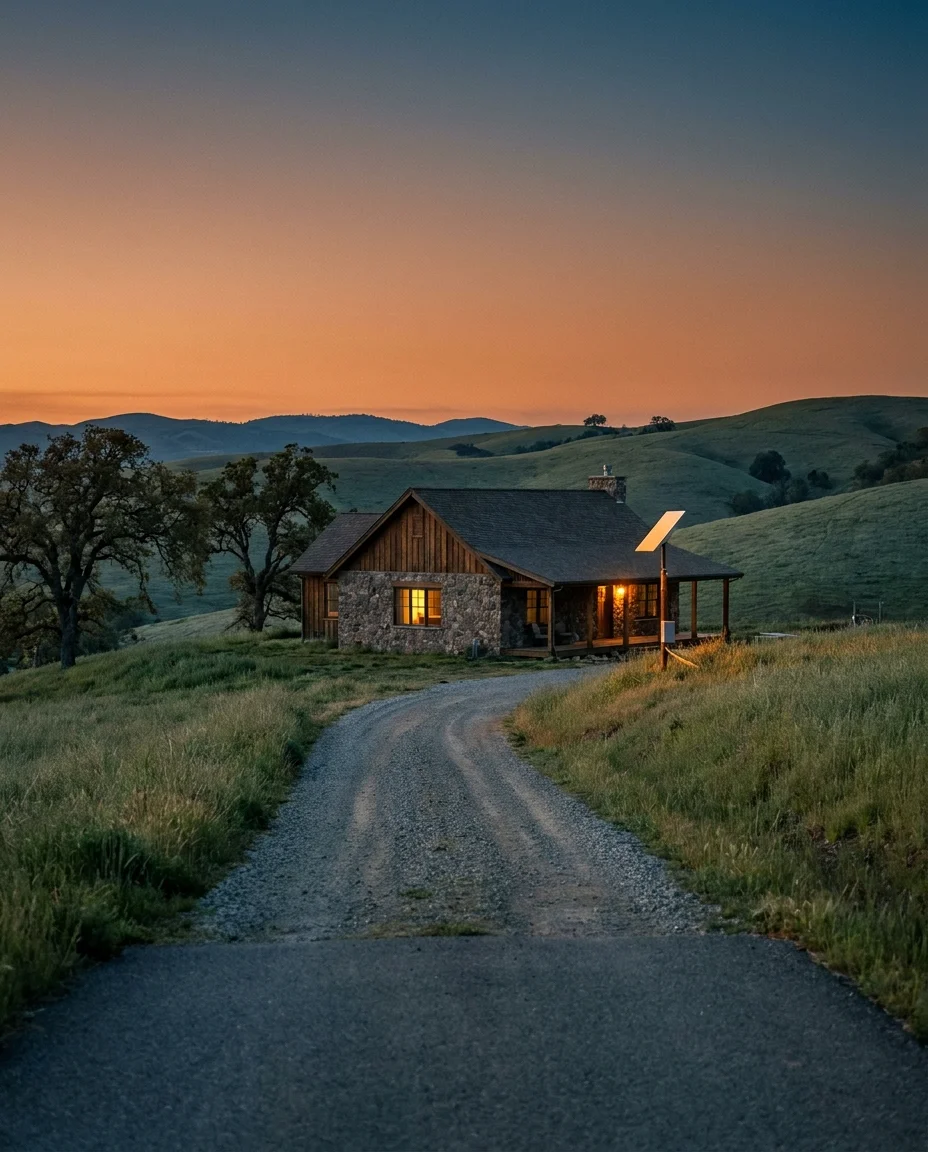
Something quietly historic happened over the last few years, and rural America is still catching up to what it means. For the first time ever, a whole lot of good jobs stopped caring where you live. The work moved online, the office became a laptop, and suddenly the only thing standing between a country family and a city paycheck was a decent internet connection. That's it. That's the whole barrier now.
For folks who've always wanted the country life but felt chained to town by their job, that's an enormous deal. So let's talk honestly about working from home when home is out where the pavement ends — what it actually takes, and what it opens up.
You don't have to live in the city to work like you do
There's an old assumption baked into rural life that the good jobs are in town, and if you want one, you either commute an hour each way or you move. For generations that was mostly true.
It isn't anymore. The remote-work shift means the accountant, the software developer, the customer-service rep, the project manager, the graphic designer, the online teacher, the virtual assistant, the insurance agent, the consultant — all of them can do their work from a spare bedroom looking out at a pasture just as well as from a cubicle downtown. The employer often doesn't care and sometimes doesn't even know. The work gets done, the paycheck clears, and you did it all from a place you actually want to be.
The dream of having both — the country life and the career — used to be a fantasy for most rural families. Now it comes down to one practical question: can you get an internet connection out there that's good enough to work on?
What working from home actually demands
Let's be real about what the work requires, because "internet" covers a lot of ground.
The big one is video calls. Modern remote work runs on them — the team meeting, the client call, the check-in with the boss. And a video call is unforgiving; it exposes a weak connection instantly. If your face freezes mid-sentence, if your voice cuts out, if you drop off the call and have to sheepishly rejoin, it doesn't just annoy you — it quietly tells everyone on the call that maybe the country wasn't such a smart choice. A connection that holds a video call steady is the single most important thing for working from home.
Then there's uploading and downloading — the big files, the shared documents, the design work, the reports. There's cloud software that has to stay connected all day without hiccupping. There's the simple need for the connection to handle you working while, at the same time, your spouse is on their own call and the kids are streaming something in the other room. A work-from-home connection can't be a fragile thing that one extra device knocks over.
That's a tall order for satellite, with its lag and its weather dropouts. It's a tall order for a phone hotspot that chokes under real load. It's exactly the order that a solid cellular home connection is built to fill.
The same signal, put to work
Here's how it comes together. If your cell phone works at your place — if you can make a call and load a webpage standing in what would be your home office — there's a real good chance you can put a dependable work-from-home connection there too.
It's cellular home internet, running on the wireless network that already reaches you. The equipment is about the size of a router, ships to your door, and plugs into any standard outlet — and it doesn't have to sit by the TV, so you can put it wherever the signal's strongest in the house. No dish, no line-of-sight beam for the trees to block, no technician appointment. Because it isn't satellite, weather generally doesn't drop your connection in the middle of the big meeting.
That's the whole reason Backroads WiFi exists — dependable internet built for streaming, video calls, and working from home, out where the traditional providers never reached. Our unlimited plans are made for exactly this kind of all-day, whole-family use. No contract, no credit check, plans from $70 a month, you own your equipment, and you can run a coverage check on your home address to see what works best in your particular spot before you commit. If your phone works, our internet works — and for a remote worker, that's the difference between the country dream and a country commute.
More than a paycheck: the whole connected home
Working from home is the headline, but once you've got a real connection out on the place, the whole house wakes up.
The security cameras finally work — the ones on the driveway, the shop, the barn — so you can check on the place from your phone when you're gone, which out in the country, where help is far away, is real peace of mind. The smart home stuff works: the thermostat, the doorbell camera, the whatever-you-plug-in. The kids can do their schoolwork and their video without knocking you off your work call. The whole family can stream on a Friday night without the picture falling apart. The bank, the doctor, the grandkids — all of it, right there.
You start to realize the connection wasn't just for the job. It was for the whole modern life you wanted to live out here without giving anything up.
What it means for the whole town
Zoom out from one family for a minute, because the remote-work shift is quietly reshaping whole rural communities, and mostly for the better. For decades the story of small-town America was people leaving — the young folks moving off to the city for jobs, the population aging and thinning, the school shrinking, the main street going quiet. A lot of that exodus wasn't about wanting to leave. It was about having to, because the work wasn't here.
Remote work rewrites that story, but only where the internet can support it. When people can earn a city income from a country home, they start coming back — or they never leave in the first place. A young family that can both work remotely can afford to buy the family land, fill up a house, put kids back in the local school, and spend their good salaries at the local stores. Multiply that by a few dozen families and a struggling little town starts to have a pulse again. The connection is the thing that makes it possible; everything else follows from it.
I've come to think of getting rural folks connected as something bigger than selling internet, honestly. It's a small part of giving these communities a fighting chance — a way for the places that raised us to hold onto their people and their future instead of slowly emptying out. That's a good thing to be even a small part of. And it all traces back to the same humble question: does your phone work at your place? Because if it does, a whole different future is possible right where you are.
Common questions about working from home in the country
Can I really work remotely from a rural home with no cable? Very likely. If your cell phone works at your place, cellular home internet usually works there too, and it's built for the video calls, uploads, and cloud software remote work depends on.
Will video calls hold up, or will I freeze and drop? A dependable cellular connection is built for video calls and streaming. Because it isn't satellite, it avoids the long lag and weather dropouts that plague a dish, which makes for steadier calls.
Can it handle me working while my family streams? Unlimited plans are designed for extended, whole-household use — someone working while others stream and do homework at the same time.
Is it good enough for security cameras too? Yes. It's built to support streaming, cameras, and working from home together, so a connected home with cameras and smart devices works alongside your remote work.
Have both
For a long time, rural families were told to choose: the life you want, or the career you need. That choice is mostly gone now, and good riddance. You can raise your kids where they can see the stars and keep the job that pays the bills. You can look out at a pasture from your desk. You can have both.
It just takes a connection that works out where you live. And if your phone works there, there's a real good chance you can.
"And that ye study to be quiet, and to do your own business, and to work with your own hands." — 1 Thessalonians 4:11. Sounds like a good day working from home in the country.
Backroads WiFi is an independent service provider. AT&T®, Verizon®, and T‑Mobile® are registered trademarks of their respective owners; Backroads WiFi is not affiliated with, endorsed by, or sponsored by them. Network names are used only to describe the underlying wireless network used to provide service.
#WorkFromHome #RemoteWork #WorkFromAnywhere #RuralLiving #CountryLife #HomeOffice #BackroadsWiFi #RuralInternet #SmartHome #SecurityCameras #DigitalNomad #WorkLifeBalance #StayConnected